Iran proposes joint peace and friendship park with Armenia for biodiversity protection
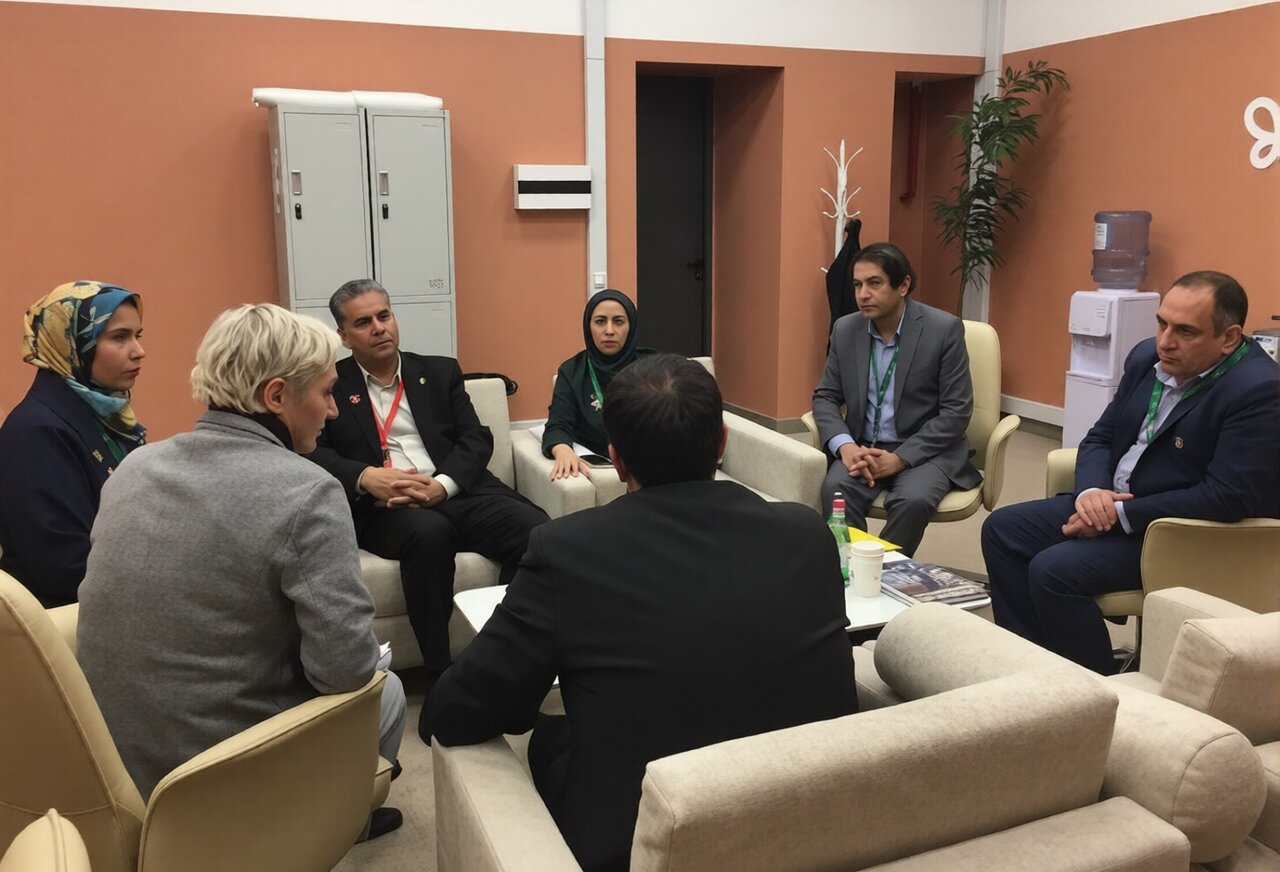
TEHRAN - Iran has proposed establishing a joint peace and friendship park with Armenia to strengthen cross-border cooperation on biodiversity conservation and wildlife protection in the Caucasus region.
Hamid Zohrabi, deputy head of Iran’s Department of Environment (DOE), met with his Armenian counterpart, Aram Meymaryan, on the sidelines of the 17th Conference of the Parties (COP17), held in Armenia from October 19 to 30, IRNA reported.
The proposed transboundary park would promote joint efforts to conserve biodiversity in northwestern Iran and the Caucasus region, while safeguarding critical wildlife corridors, including those used by the Persian leopard.
The two officials also discussed ways to expand environmental cooperation and address shared challenges, including the protection of the Aras River.
Meymaryan welcomed the proposal and praised the active participation of the Iranian delegation in COP17.
The officials agreed to establish a working group to follow up on the agreements reached after the conclusion of the summit.
COP17 was held in two stages: technical-level discussions followed by the ministerial segment.
The leaders’ summit took place on October 16, featuring an address by President Masoud Pezeshkian. It marked the first time a president of the Islamic Republic of Iran had attended a Conference of the Parties to the Convention on Biological Diversity.
Addressing the summit, Pezeshkian called for “peace diplomacy” to protect biodiversity, condemning the devastating environmental impact of wars of aggression as ecocide and urging the international community to establish effective, transparent and enforceable mechanisms to safeguard natural heritage during wartime.
Shina Ansari, the head of the Department of Environment, also addressed the meeting, saying that environmental diplomacy can become an instrument of peace diplomacy, while the relationship between biodiversity, peace, and security should be viewed as a two-way relationship.
Ansari added the link between biodiversity and peace was not merely an ethical or political issue, but a fundamental concern in environmental governance, international law, and human security.
Under the Convention on Biological Diversity, she said, the main drivers of biodiversity loss are generally understood to include land-use change, habitat destruction, pollution, unsustainable exploitation of natural resources, and climate change.
The Iranian delegation also held a meeting with Vivek Menon, chair of the International Union for Conservation of Nature (IUCN) Species Survival Commission (SSC), and discussed ways to strengthen cooperation in developing management and conservation programs for endangered species.
The talks particularly focused on conservation and restoration programs for the Asiatic cheetah, the great bustard, and the Persian zebra, onager, their respective habitats, as well as the reintroduction of the Persian fallow deer into its natural habitats.
The two sides also discussed enhancing technical and scientific cooperation and providing funding under sanctions.
Menon expressed hope that ongoing collaboration between IUCN officials and Iranian experts would guarantee the survival of endangered species, such as the Asiatic cheetah, in Iran.
During this year’s summit, Iran officially joined the Coalition of Action to Recover Endangered Species (CARES), which aims to strengthen international cooperation to preserve and restore the country’s wildlife.
The CARES was unveiled at COP17 in Yerevan on October 16. Colombia and Armenia launched the initiative with 17 founding participating governments: Armenia, Belize, Brazil, Canada, China, Colombia, Costa Rica, Ecuador, Fiji, Indonesia, Madagascar, Mexico, Panama, Papua New Guinea, Peru, United Kingdom, and Vanuatu. Iran has become a member of the coalition as the 18th country.
The coalition is supported by the Reverse the Red Action partnership as secretariat. The membership document was signed by Zohrabi, on October 26.
Speaking at a meeting on this occasion, Zohrabi underlined the need for equitable distribution of resources and technology to save endangered species.
Iran’s name will be listed on the website of the coalition as a country that has developed action plans for the conservation of 40 wildlife species to benefit from technical, scientific, and financial support from CARES.
MT/MG
Leave a Comment